
TAP Storage Plan
Peace of Mind Starts with a Plan
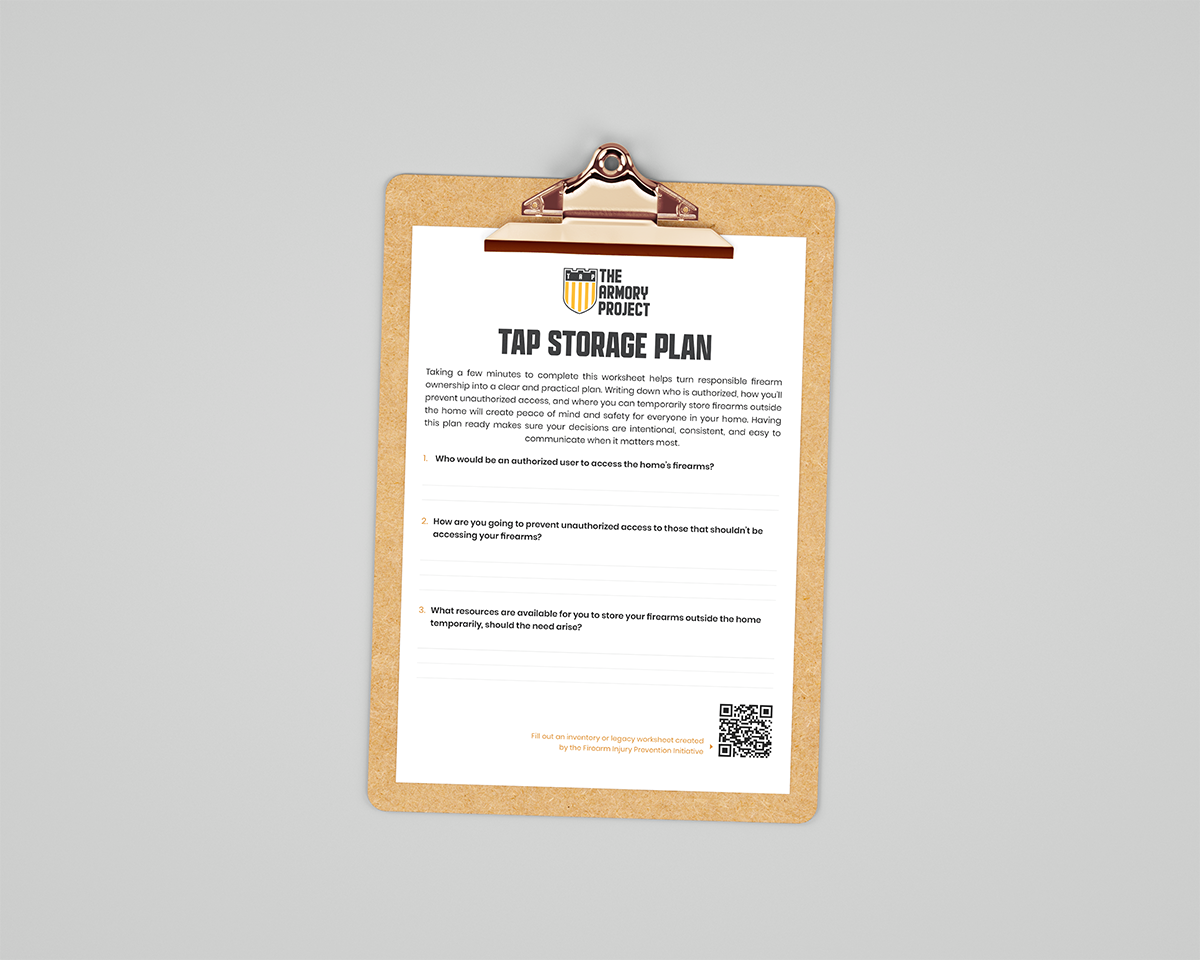
Life can change fast. A sudden decline in mental health, a relationship crisis, a job loss, or a stressful season can make clear decision-making harder than usual. The TAP Storage Plan is a quick, three-question worksheet that helps you write down who can access your firearms, how you will prevent unauthorized access, and what temporary off-site options are available if you ever need them.
Why planning ahead matters
Planning is easiest when you feel steady, not when you feel overwhelmed. Having a written plan helps you make decisions, communicate them clearly, and follow through consistently if circumstances change.
Benefits of having a plan:
Clarifies who can access firearms in your home

Reduces the chance of unauthorized access

Makes it easier to act quickly in times of stress

Allows you to communicate more clearly with your household
The 3 questions
These questions are simple by design. They’re built to help you make decisions that are intentional, consistent, and easier to follow if life suddenly feels harder than usual.
1. Who would be an authorized user to access the home’s firearms?
Example answers:
“Only me. No one else has keys or codes.”
“My wife and I. We both know the code to the safe, and we don’t share it with anyone else.”
“Only the adults listed here: ____. Teenagers and guests are not authorized under any circumstances.”
Clear authorization reduces confusion and helps prevent accidental or unintended access. It also makes expectations easy to communicate to everyone in the household.
2. How are you going to prevent unauthorized access to those who should not be accessing your firearms?
Example answers:
“Firearms are stored in a locked safe at all times. The code is not shared, and the backup key is secured.”
“When we have guests, kids visiting, or a lot of people in the house, everything gets fully locked up, and access stays with one authorized adult.”
“Handguns that I keep out for quick access are secured with a biometric slide lock or trigger lock to stop unauthorized access.”
Strong storage habits protect kids, visitors, and anyone who should not have access. This question turns good intentions into specific steps you can follow consistently.
3. What resources are available for you to store your firearms outside the home temporarily, should the need arise?
Example answers:
“A trusted firearm retailer or range near me that offers voluntary temporary storage. I have their phone number saved, and I know how their process for storage works.”
“A list of local storage partners in my state. I can keep a list of 2 to 3 backup locations in case one is unavailable.”
“A plan to contact a storage location first, confirm they can accept my firearms, then bring them during business hours.”
In times of stress, it is harder to think clearly and make calls. Knowing your options ahead of time makes it easier to create time and distance when needed. Laws vary across the United States that make giving a firearm to a family member unlawful in some states. Consult your local and state laws before storing your firearm with another individual. Worried About a Veteran provides a listing of relevant laws by state that is updated about once a year.
Reminder: Keep your plan current
We recommend reviewing your TAP Storage Plan every 6 to 12 months, or after a major life change such as a move, a relationship change, a job change, new household members, or a shift in mental health.

Ready to create your plan?
It takes just a few minutes and can make decision-making simpler when it matters most.
Looking for a few other tools to use alongside the Storage Plan?
Here are additional resources to help you plan and find support options.
The Firearm Life Plan by Firearm Injury Prevention Initiative: Worksheets to take stock of your firearms, decide what happens to them, and who you trust to be involved.
The Mental Health Plan by Walk The Talk America: A prevention tool you can fill out anytime that includes questions to help you stay prepared for stressful seasons.
ROOTS Project by Walk The Talk America: Spotlights modern storage devices and practical tools that gun owners can use to improve safety.